Blog · For parents
AI-generated children's videos: how to tell good from junk
This one comes with a disclosure: we use AI tools to make our own series. That is exactly why we think parents should know what the warning signs are.
Short answer. Warning signs: characters whose appearance changes between shots, hands or limbs that are wrong, speech that does not match the mouth, dozens of uploads a day, and no named people behind the channel. Responsible use looks like a fixed cast, published content rules, and a human deciding what gets released.
Why this matters now
The cost of producing animated children's content has collapsed, and the volume has risen accordingly. A large share of it is made to fill a search result rather than to be watched twice, and it is aimed at an audience that cannot tell the difference.
The problem is rarely anything shocking. It is incoherence — a character who changes colour mid-scene, a story that does not resolve, speech that does not match the picture. Small children cannot articulate that something is wrong, but they get less from it.
The thirty-second check
- Watch one character across three shots. Do the clothes, markings and proportions stay identical? Drifting identity is the most reliable tell.
- Look at hands, hooves and legs. Extra fingers, a four-legged animal briefly on two, a leg emerging from the wrong place.
- Watch a mouth while someone speaks. Mismatched lip movement is common in cheaply generated content.
- Check the upload rate. A channel posting fifteen videos a day is not reviewing any of them.
- Look for a human. No about page, no names, no stated rules — nobody is answerable for what is in it.
What responsible use looks like
The tool is not the problem; the absence of a person is. Used carefully, the same technology lets a very small team make calm, consistent children's animation that would otherwise be unaffordable.
What separates the two, in practice: a fixed cast with locked designs so characters cannot drift; published rules about what never goes into an episode; a human watching every clip before release; and a real name behind the channel.
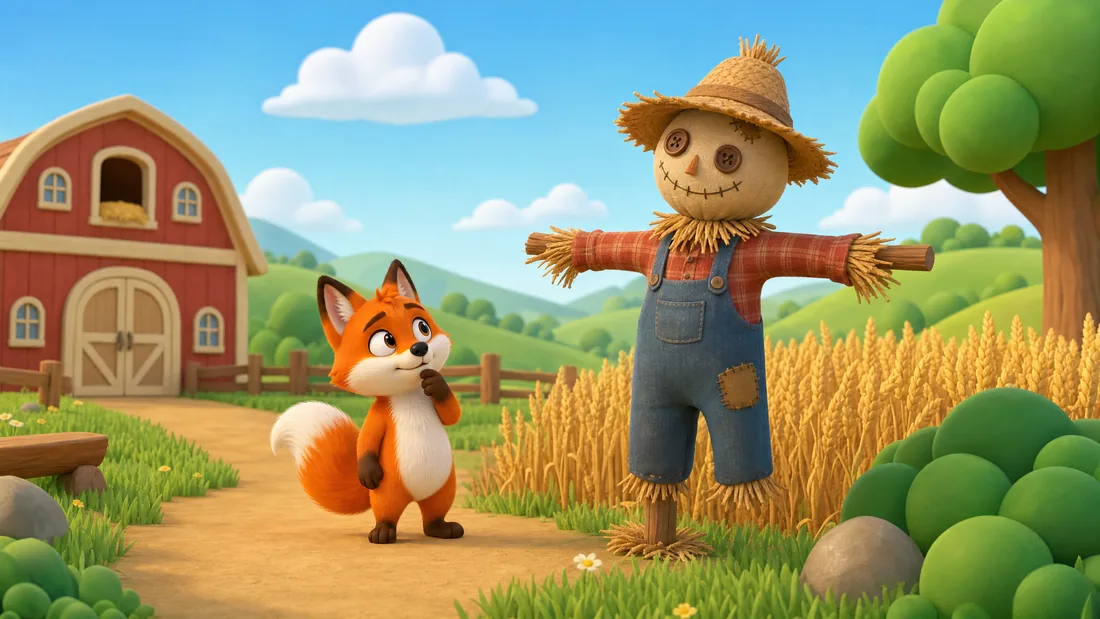
Tibino Kids is one of them: calm 3D farm stories for ages 2–6, cut at six to twelve seconds per shot, with no villains, no jump scares and no cliffhangers. We publish our production rules openly, including the pacing target and the list of things we never show — because a claim you can check is worth more than one you cannot.
What to do if you find junk
Do not simply close it — mark it. On YouTube Kids you can block a channel and report a video; on the main app, reporting and “don't recommend this channel” both feed back into what gets shown. On a shared account these signals accumulate quickly.
The most effective long-term step is still a short, chosen watchlist. A recommendation rail that never has to guess is the simplest defence against volume.
Frequently asked
Is AI-generated children's content bad?
Not automatically. What matters is whether a person is deciding what gets released and holding a consistent standard. Content generated in volume with no human review is where the quality problems concentrate.
How can I tell if a kids' video was made with AI?
Look for characters whose appearance shifts between shots, anatomical errors in hands and limbs, mouths that do not match speech, and very high upload frequency. Some well-made AI content shows none of these.
Do you use AI to make Tibino Kids?
Yes, for animation and voice, with locked character designs and a human reviewing every clip before it is published. We say so openly because parents deserve to know how what their children watch is made.
Why is there so much low-quality kids' content?
Because children's search terms are predictable and the audience does not complain. High volume plus low production cost is a viable strategy in that gap, which is why a chosen watchlist beats search at this age.
Related reading: What YouTube content is good for my 4-year-old? · What can toddlers watch on YouTube without worry? · The best YouTube series for toddlers