
Blog · For parents
Alternatives to endless nursery rhyme loops
The hour-long compilation is the most convenient thing on the platform and quietly one of the least useful.
Short answer. The problem is not the songs — it is the format. A sixty-minute loop has no ending, so there is never a natural moment to stop. Swap to individual songs or short episodes with real endings; the same rhymes exist in calmer, self-contained versions.
What the loop actually does
A compilation is designed so that nothing ever finishes. Every time a song ends, another begins before the child disengages. That is excellent for watch time and poor for everything else — most obviously, it removes the moment where stopping feels natural.
It also flattens the songs. Rhymes work through anticipation: knowing the next line and getting it right. Sixty minutes of continuous singing gives no space for that.
What to use instead
- Individual songs. The same nursery rhymes as separate three-minute videos, which end.
- Short story episodes. Two to five minutes with a beginning and an end.
- Audio only. Nursery rhymes as audio work extremely well in the car or at bedtime, and remove the screen entirely.
- A playlist you built. Five songs you chose, which stops when it stops.
Calmer versions of the same songs
Every well-known nursery rhyme exists in several treatments, and they differ enormously in pace. Super Simple Songs is markedly calmer than most while covering the same repertoire. Broadcaster channels such as CBeebies also carry slower versions.
If a particular song is a favourite, it is almost always worth searching for a different version of it rather than dropping it. The song is not the problem.
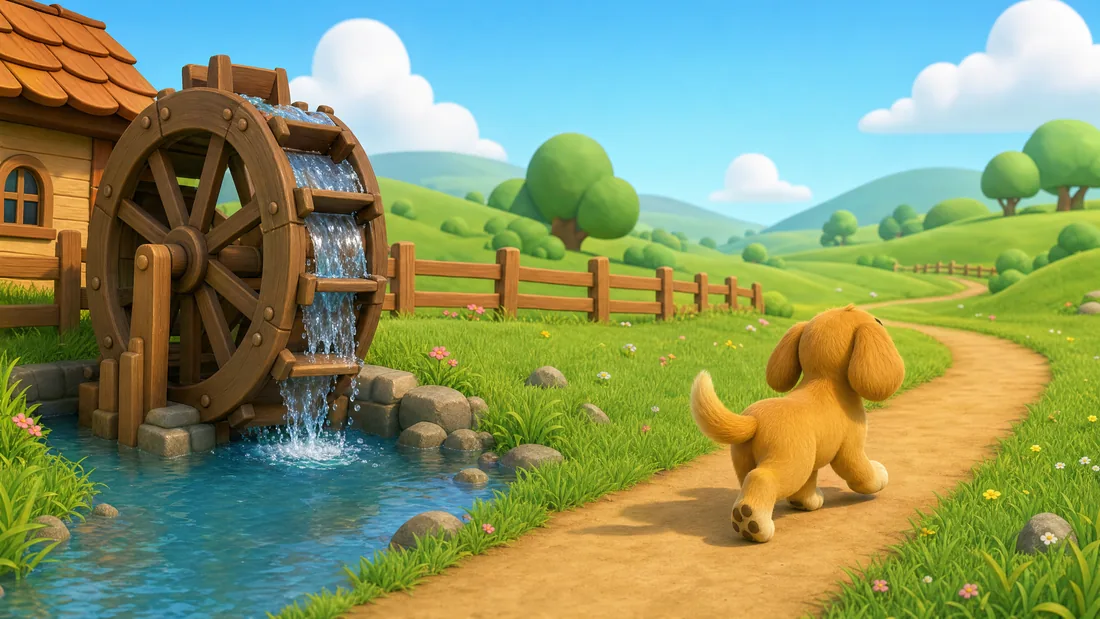
Tibino Kids is one of them: calm 3D farm stories for ages 2–6, cut at six to twelve seconds per shot, with no villains, no jump scares and no cliffhangers. Its episodes use farm sounds and simple repetition within a short story instead of a song loop.
Making the change without a fight
Announce the ending in advance — “two songs, then we turn it off” — and hold it. The first few times will be harder than the compilation was, and then it becomes the norm, because the child now knows where the end is.
Turning auto-play off matters more here than anywhere else, since compilations are precisely what the recommendation rail offers next.
Frequently asked
Are nursery rhymes bad for toddlers?
Not at all. Nursery rhymes support rhythm, memory and early phonological awareness. The issue is the endless-compilation format, not the songs themselves.
Why does my child get upset when a compilation ends?
Because it was built never to end, so there is no point at which stopping feels natural. Individual videos with real endings make the transition far easier.
Is audio better than video for nursery rhymes?
For many families, yes. Audio keeps the language and rhythm, works in the car and at bedtime, and removes the screen. Children still sing along without the visuals.
How long should a nursery rhyme video be?
Two to five minutes for a single song, or a short self-made playlist. The key feature is a defined ending rather than a particular duration.
Related reading: What YouTube content is good for my 4-year-old? · What can toddlers watch on YouTube without worry? · The best YouTube series for toddlers