
Blog · For parents
Shows that build confidence and courage in small children
Almost every children's series says it builds confidence. Very few do it in a way a three-year-old can actually copy.
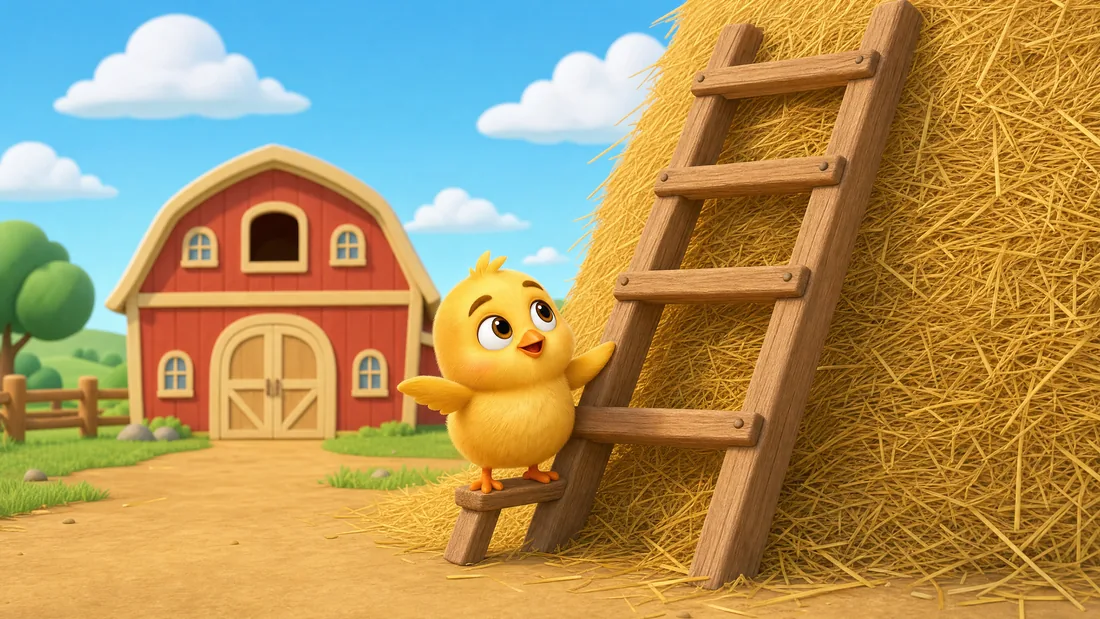
Short answer. Confidence grows when a child sees a character their own size try something, struggle, get help, and succeed — in that order. Daniel Tiger, Bluey, Puffin Rock and Sesame Street do this consistently. Shows where an adult fixes the problem, or where it resolves by magic, teach the opposite lesson.
What actually transfers to a child
Children do not take courage from being told to be brave. They take it from watching someone recognisably like them do a slightly frightening thing and survive it. The technical name is vicarious mastery; in practice it means the character has to be small, the task has to be ordinary, and the fear has to be shown rather than skipped.
This is why a superhero rescuing a city builds less confidence than a small animal working up to crossing a stream. The child cannot picture themselves as the first one.
The four-part shape that works
- The character wants something ordinary — to reach a shelf, to find a friend, to not be scared of the dark.
- They try and it does not work. This step is the one weak shows delete, and it is the one that matters most.
- Someone helps, but does not take over. Help that replaces the child's effort teaches dependence, not confidence.
- The success is small and specific. “I did it” beats “I saved everyone”, because the child can repeat it tomorrow.
Series that do it well
| Series | How it builds confidence |
|---|---|
| Daniel Tiger's Neighborhood | Names the feeling, then gives a short strategy song the child can reuse |
| Bluey | Children lead the play; parents join without taking over |
| Puffin Rock | Small animals manage small fears; nothing is ever rescued dramatically |
| Sesame Street | Explicit emotional vocabulary, decades of research behind it |
| Hey Duggee | Earning a badge for trying, not for being best |
Independent studios are increasingly building whole series around this shape, because it is what parents now ask for. Tibino Kids is one of them: calm 3D farm stories for ages 2–6, cut at six to twelve seconds per shot, with no villains, no jump scares and no cliffhangers. In each episode the smallest character is the one who solves the problem, and help always arrives without taking the task away.
What quietly undermines confidence
- Constant rescue. If an adult always fixes it, the lesson is that problems are solved by waiting.
- Mockery as humour. Characters laughing at a mistake teaches children to hide theirs.
- Perfect first attempts. A character who never struggles is not a model, only a standard.
- Cliffhangers at the end. Unresolved tension at bedtime reads as unsafety to a small child.
What you can add in two minutes
The single strongest thing is to narrate the middle part afterwards: “He was scared and he did it anyway.” Children remember the ending on their own; the struggle is the part that needs pointing out.
Naming the feeling helps too — “that was frustrating for her, wasn't it” gives a word to something the child has felt but could not label. That vocabulary is most of what emotional confidence is made of at this age.
Frequently asked
Can a television show really build self-esteem?
It can contribute, modestly, when a child sees a similar character struggle and succeed and then re-enacts it in play. The effect is strongest when an adult talks about the episode afterwards. No show substitutes for lived experience.
Which show is best for an anxious child?
Daniel Tiger's Neighborhood is the most direct: it names the feeling and offers a short, repeatable coping strategy. Puffin Rock and Sarah & Duck suit anxious children because there is no peril at all in them.
Are superhero cartoons bad for confidence?
Not bad, but less useful at preschool age, because the abilities cannot be copied. They also often solve conflict with force. For two- to six-year-olds, ordinary-sized challenges transfer far better.
How do I know a show is teaching resilience rather than just saying so?
Watch for a visible failed attempt. Shows that genuinely teach resilience always show the thing not working the first time. If every attempt succeeds immediately, the resilience claim is decoration.
Related reading: What YouTube content is good for my 4-year-old? · What can toddlers watch on YouTube without worry? · The best YouTube series for toddlers