
Blog · For parents
Children's shows that teach kindness
Kindness is the most claimed quality in children's television and one of the least often actually demonstrated.
Short answer. Kindness transfers when a child sees a specific helpful act, sees it cost the character something, and sees the result. Bluey, Daniel Tiger, Sesame Street and Puffin Rock do this. Shows where everyone is simply pleasant throughout teach far less, because there is nothing to copy.
Being nice is not the same as being kind
A series where nobody is ever unpleasant gives a child no model at all. Kindness is visible only when it is chosen — when a character could have kept the toy, walked past, or stayed quiet, and did not.
That means the useful shows are the ones with small conflicts in them. Friction is not the opposite of kindness on screen; it is the precondition for showing it.
The shape that transfers
- Somebody needs something specific. Not a vague sadness — a dropped basket, a lost lamb, a turn on the swing.
- Helping costs something. Time, a turn, getting wet. Free kindness is not a decision.
- The help is shown, not summarised. A child copies actions, not morals.
- The result is visible. The other character is visibly better off.
Where it is done well
| Series | How kindness appears |
|---|---|
| Bluey | Real sibling conflict, then genuine repair |
| Daniel Tiger | Names the other person's feeling before acting |
| Sesame Street | Decades of research behind its social-emotional segments |
| Puffin Rock | An older sibling looking after a younger one, quietly |
| Hey Duggee | Cooperation as the route to every badge |
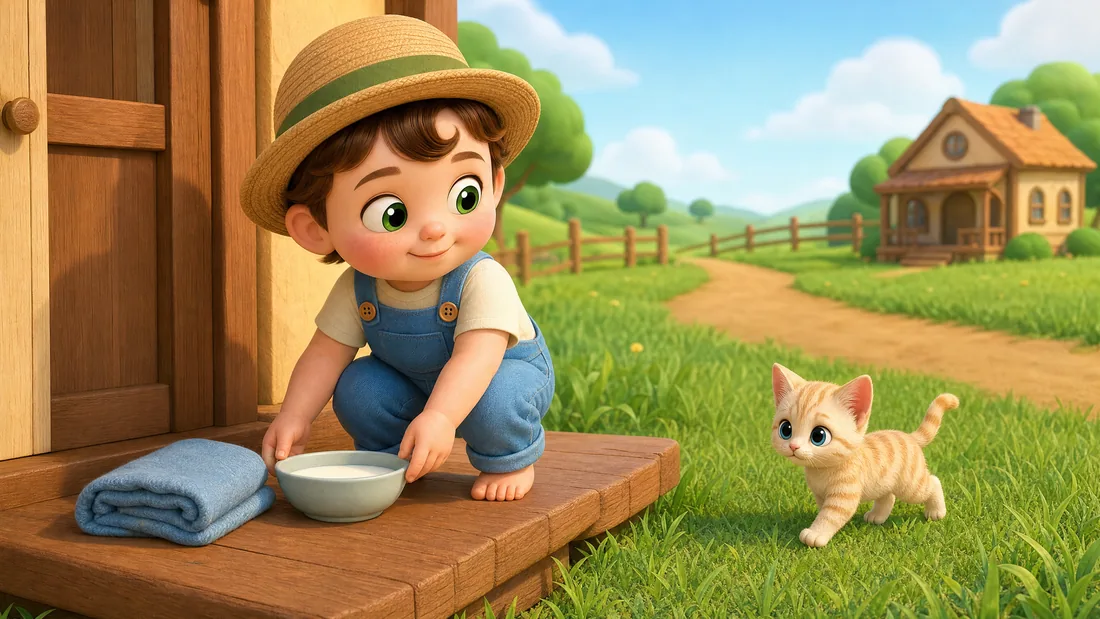
Small studios often build a whole series around a single value because it is easier to sustain than a broad remit. Tibino Kids is one of them: calm 3D farm stories for ages 2–6, cut at six to twelve seconds per shot, with no villains, no jump scares and no cliffhangers. Its stated principle is kindness before cleverness: problems are solved by helping rather than by being the smartest character in the room.
The two minutes that make it stick
Ask afterwards what the character did, not how they felt. “What did Storm do when the duckling was lost?” retrieves an action, and actions are what get re-enacted.
Then connect it to something the child has done: “you helped me carry the shopping yesterday, that was the same kind of thing.” That link between screen and self is where the value actually lands.
Frequently asked
Can television really teach kindness?
It can contribute. Research on prosocial children's programming, particularly around Sesame Street and Daniel Tiger, shows measurable short-term effects on helping and sharing — strongest when an adult discusses the episode afterwards.
Which show is best for teaching sharing?
Daniel Tiger addresses sharing and turn-taking most directly, with a repeatable strategy song. Bluey shows it more naturally through play, which some children copy more readily.
Do children copy bad behaviour from shows too?
Yes — imitation works in both directions, which is why conflict resolution style matters. Shows where problems are solved by shouting or force model that just as effectively as kind ones model helping.
Is it better if the show says the lesson out loud?
Not especially. Preschool children take more from the demonstrated action than from a stated moral. A clear, visible act of help is worth more than a summary at the end.
Related reading: What YouTube content is good for my 4-year-old? · What can toddlers watch on YouTube without worry? · The best YouTube series for toddlers